Culture & History
The Caravelle Lighthouse: sentinel of the Atlantic
Villa Kaïbana July 2, 2026 5 min read
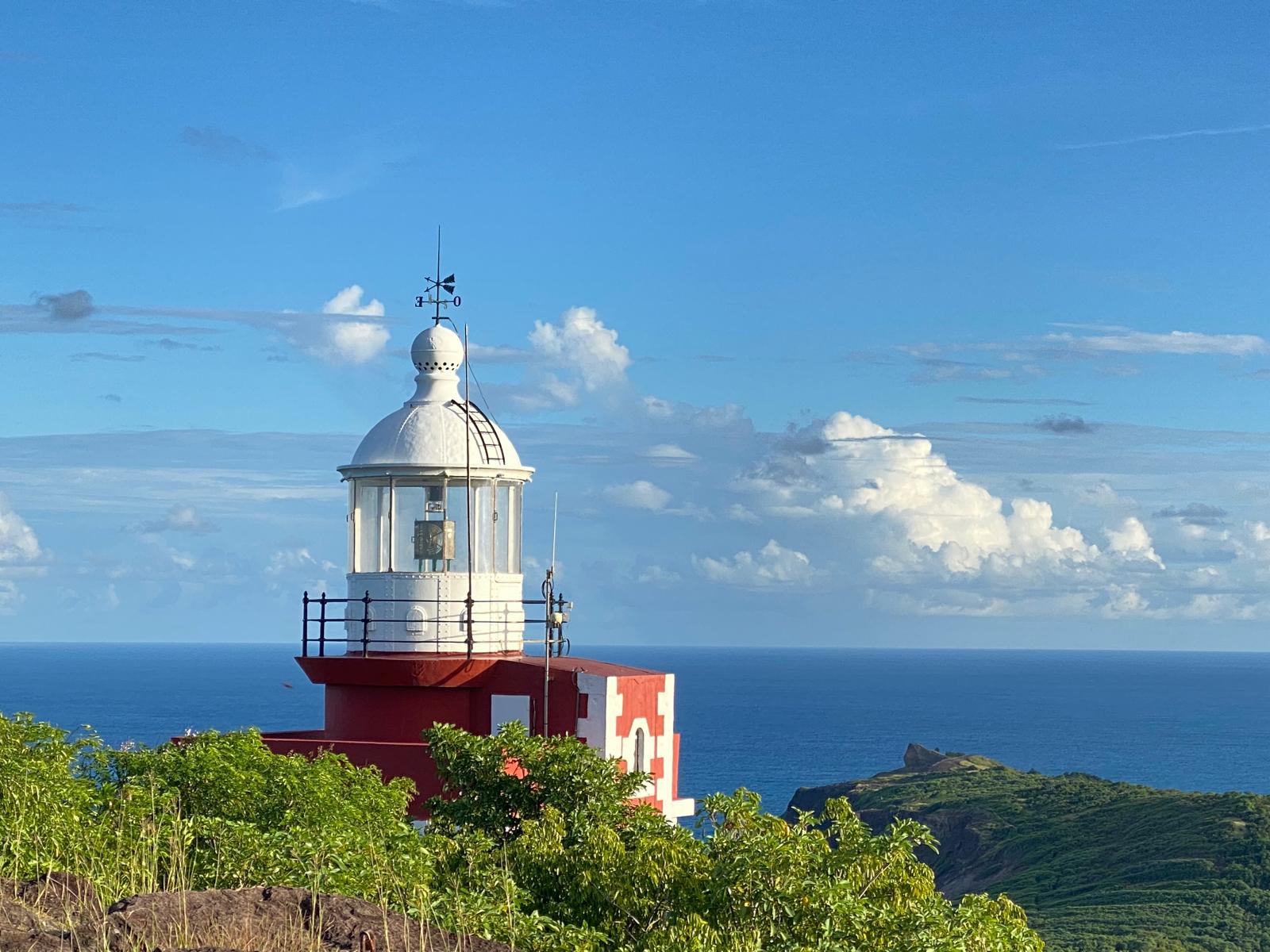
Right at the tip of the peninsula, where the land pushes out like a ship’s prow into the Atlantic, a red-and-white tower stands guard. Since 1862, the Caravelle lighthouse has swept the ocean with three white flashes every fifteen seconds — the same signal, night after night, for the boats working up Martinique’s windward coast. It’s one of the island’s oldest sentinels, and one of the highest-set.
You climb up for the view, an immense 360-degree sweep over both bays and the open sea. But the lighthouse has a story too — a tower ordered under Napoléon III, a nature reserve wrapped around it, and a ruined plantation tucked just below. Here’s what to know before you take the trail, a few minutes from Villa Kaïbana.
A tower born under Napoléon III
The lighthouse was decided on 19 December 1852, though it would take nearly a decade to complete. Built between 1860 and 1861 under the Second Empire, it was first lit in 1862. Its job: to mark the Atlantic coast — the “windward” side, the most exposed on the island — and guide ships toward the harbour of La Trinité, sheltered behind the peninsula.
The structure itself is modest and squat: a square masonry tower topped with its lantern, barely fourteen metres tall. The rock does the rest. The lighthouse sits 162 metres above the sea, which makes it, by elevation, one of the highest in France. From up there its beam carries more than forty kilometres out — twenty-two and a half nautical miles.
For a long time, keepers lived at the foot of the tower, tending it and lighting it each evening. Eventually the electronics took over: the lighthouse was automated in 1970, and the last keeper left in 1987. Today it watches alone. In 2013 it was listed as a monument historique — the hundredth in Martinique.
Sentinel of the reserve
The lighthouse doesn’t crown just any hill. The whole tip of the peninsula has been a nature reserve since 1976: nearly 388 hectares of wild land, managed by Martinique’s Regional Nature Park and kept clear of any building.
It’s a concentrate of ecosystems. On the heights, a dry forest holds out against salt and wind; lower down, toward the Baie du Trésor, spreads a rare mangrove of “mangle-médaille.” The cliffs take the full force of the Atlantic swell, and the sky belongs to seabirds: terns, red-billed tropicbirds, and the shy white-breasted thrasher, a songbird found almost nowhere else. The peninsula owes its name to a caravel — a sailing ship whose outline, so the story goes, could be read in the profile of this spit of land flung out toward the open sea.
The 360° view
This is the reward for the climb. A few steps from the lighthouse, an orientation table takes in the whole horizon. On one side, the peninsula’s two great cut-in bays — the Baie du Trésor and the Baie du Galion — and the village of Tartane set on its isthmus. On the other, the Atlantic as far as the eye can see.
Your gaze runs over the entire reserve, its cliffs and coves. On a clear day it carries all the way to the volcanic heights of the north — Mont Pelée in the distance — and, far out on the horizon, to the blue silhouette of Dominica. Few viewpoints in Martinique give you so much in a single glance.
Château Dubuc, just below
Before you even start the climb, you meet another page of history: the ruins of Château Dubuc. The Dubuc family, Norman nobles, settled in Martinique from 1657 and were granted these lands at La Trinité; the manor house went up around 1725. It was then a sprawling sugar-and-coffee estate of some 350 hectares, whose prosperity rested — as everywhere at the time — on the labour of hundreds of enslaved people.
A stubborn legend credits the Dubucs with a smuggling trade, goods and captives landed quietly in the Baie du Trésor. Ruined at the end of the 18th century, plundered by the English in 1794, the estate was abandoned around 1815. Its ruins, listed as a monument historique in 1992, can be visited today: a small museum tells the story of the domain (paid entry, a few euros, open during the day). It’s also where you park the car before setting off for the lighthouse.
Getting there from the villa
From Villa Kaïbana, it’s about an eight-minute drive to the Château Dubuc car park, at the entrance to the reserve. From there, two waymarked trails leave from the same point: an easy short loop of around 1 h 30, through forest and mangrove, and a longer loop of roughly 9 kilometres (3 h 30) that passes the lighthouse, Pointe Caracoli and the Baie du Trésor. For the lighthouse alone, allow about thirty minutes on foot from the car park.
One useful note: the inside of the tower isn’t open day to day — you only climb it during the occasional guided visit, on Heritage Days or when the Park schedules one. But the foot of the lighthouse and the orientation table are freely accessible, and that’s where the view is. Entry to the reserve itself is free.
A few habits to make the most of it: the peninsula is very exposed and offers almost no shade. Set off early in the morning or in the late afternoon, never in the midday sun; bring water and good shoes, and head back down before dark — in the tropics, night falls fast and without warning.
The lighthouse, the Kaïbana way
The best moment is perhaps the end of the day. You leave the villa as the heat eases, climbing gently while the light gilds the cliffs. At the top, the whole peninsula lies at your feet: both bays, the ocean, the tiny village, and a vast silence broken only by the wind. You come back down at dusk, legs pleasantly tired.
Back at the house, there’s just enough evening left for a ti’punch on the terrace, facing the night as it settles over Tartane. It’s one of the finest half-days of a stay here: a little history, a great lungful of sea air, and the villa waiting — only minutes from the end of the world.
Read next
Culture & History
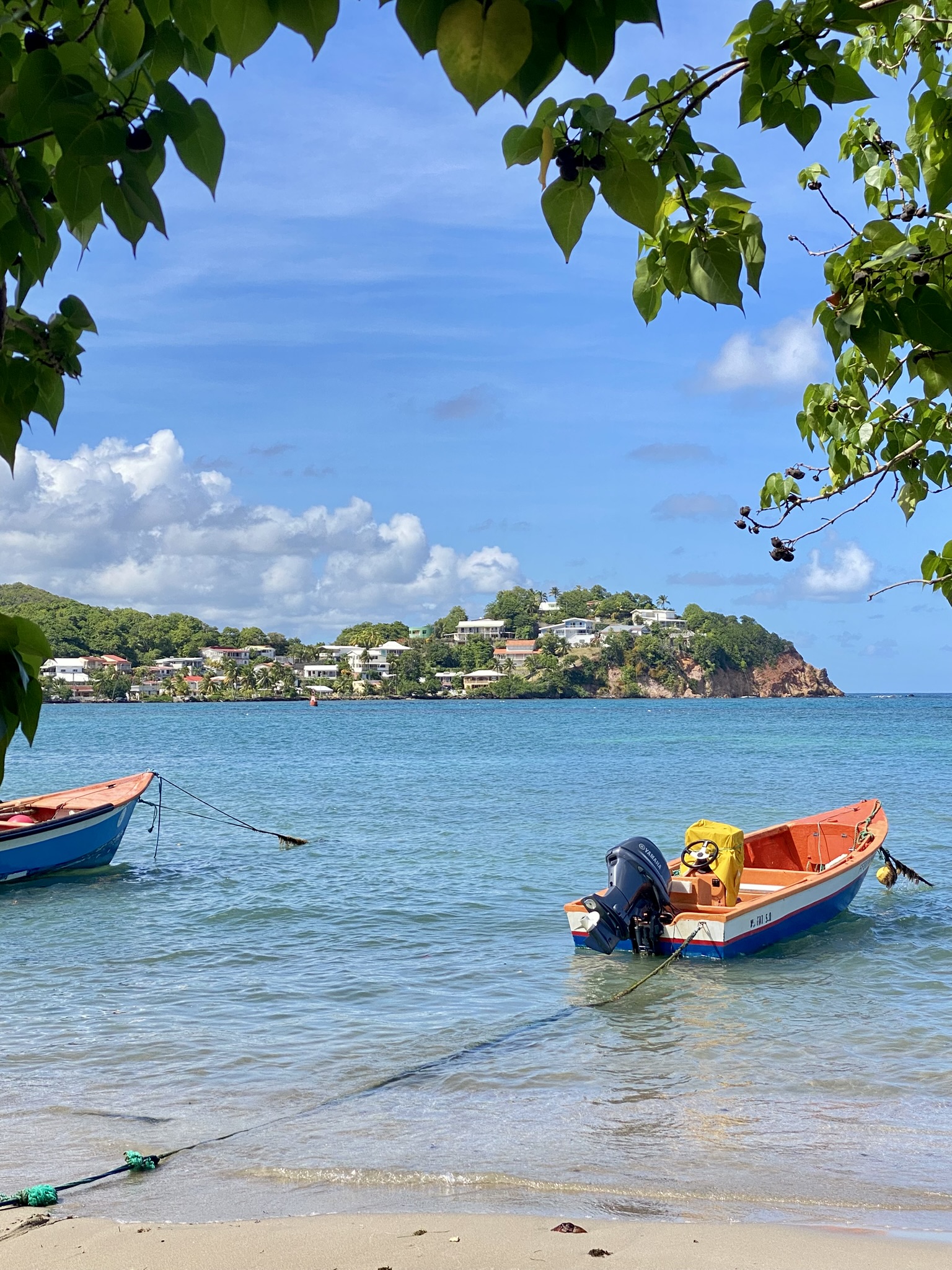
Tartane, the fishing village of the Caravelle
Clinging to its isthmus, Tartane lives to the rhythm of its gommiers and the swell. Its history, its beaches and its seafront tables, a few steps from the villa.
July 12, 2026 · 5 min read
Culture & History
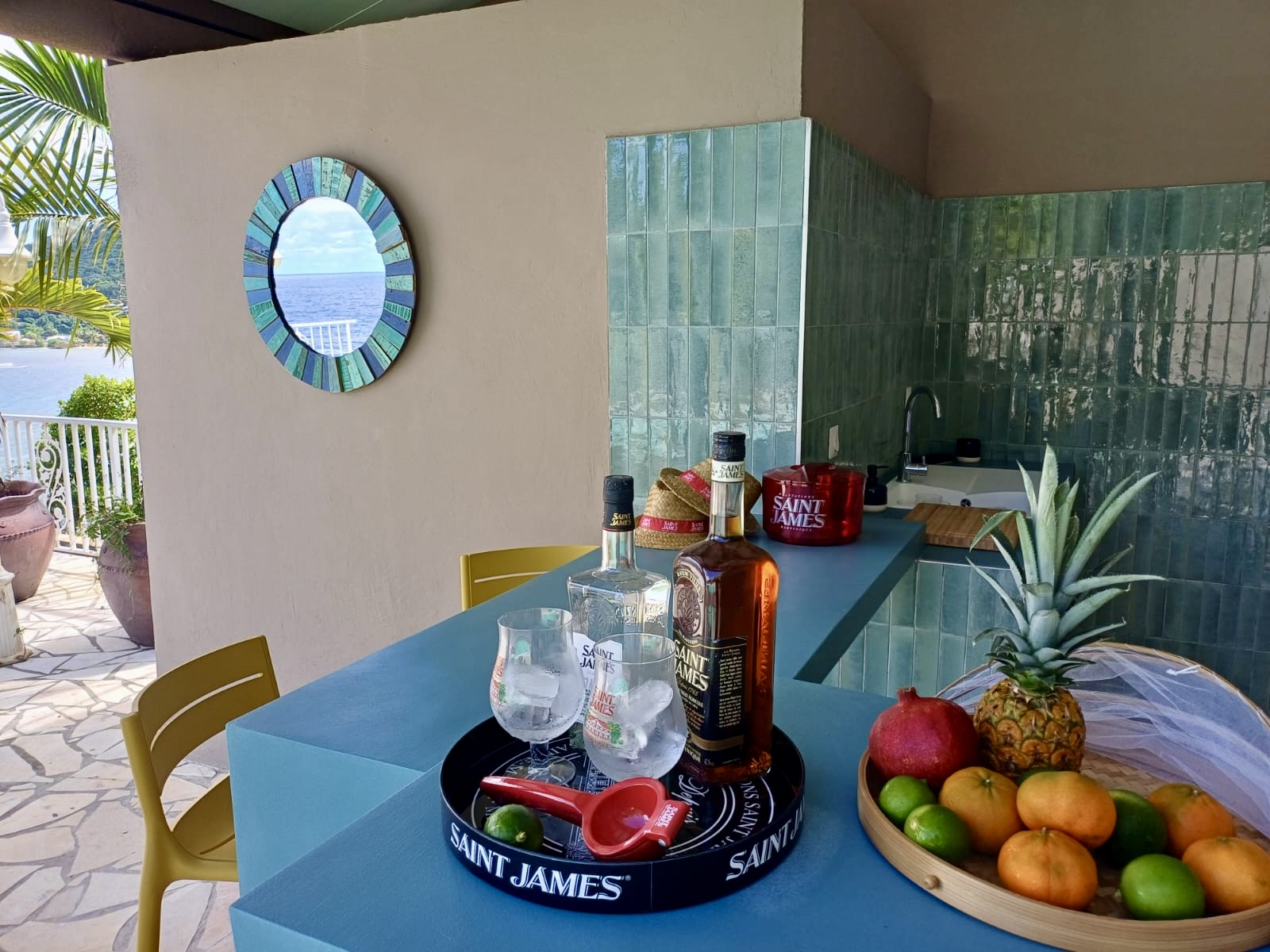
Agricole rum: the story of a Martinique appellation
Born from fresh cane juice rather than molasses, Martinique's agricole rum is the only rum in the world protected by an AOC. A short story of terroir.
March 12, 2026 · 5 min read
Sports
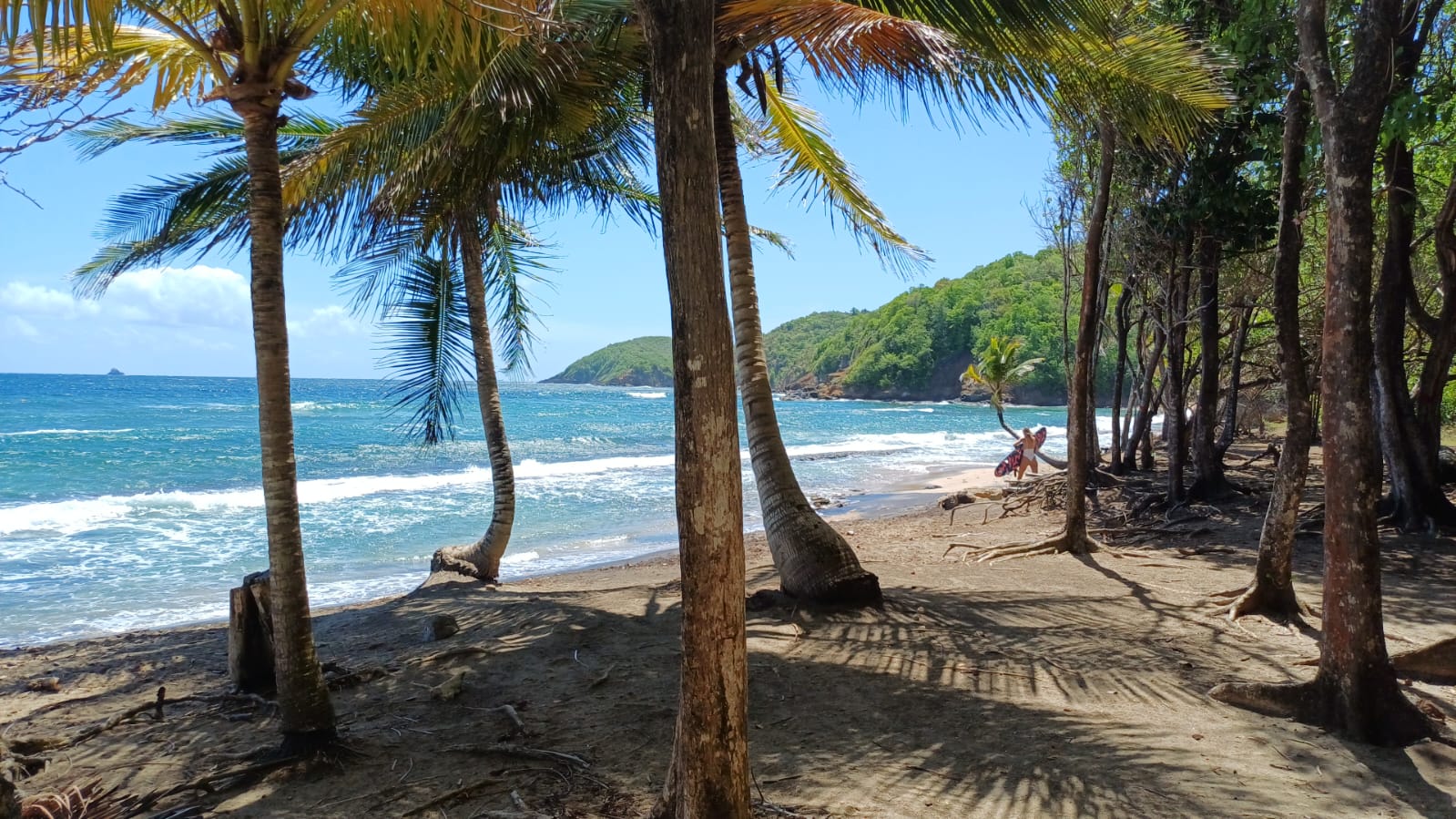
Surfing in Tartane: A Guide to the Surfers' Beach
Steady waves, a perfect exposure and surf schools right on the sand: in Tartane, the Surfers' Beach is the ideal spot for a first session, steps from the villa.
June 1, 2026 · 4 min read